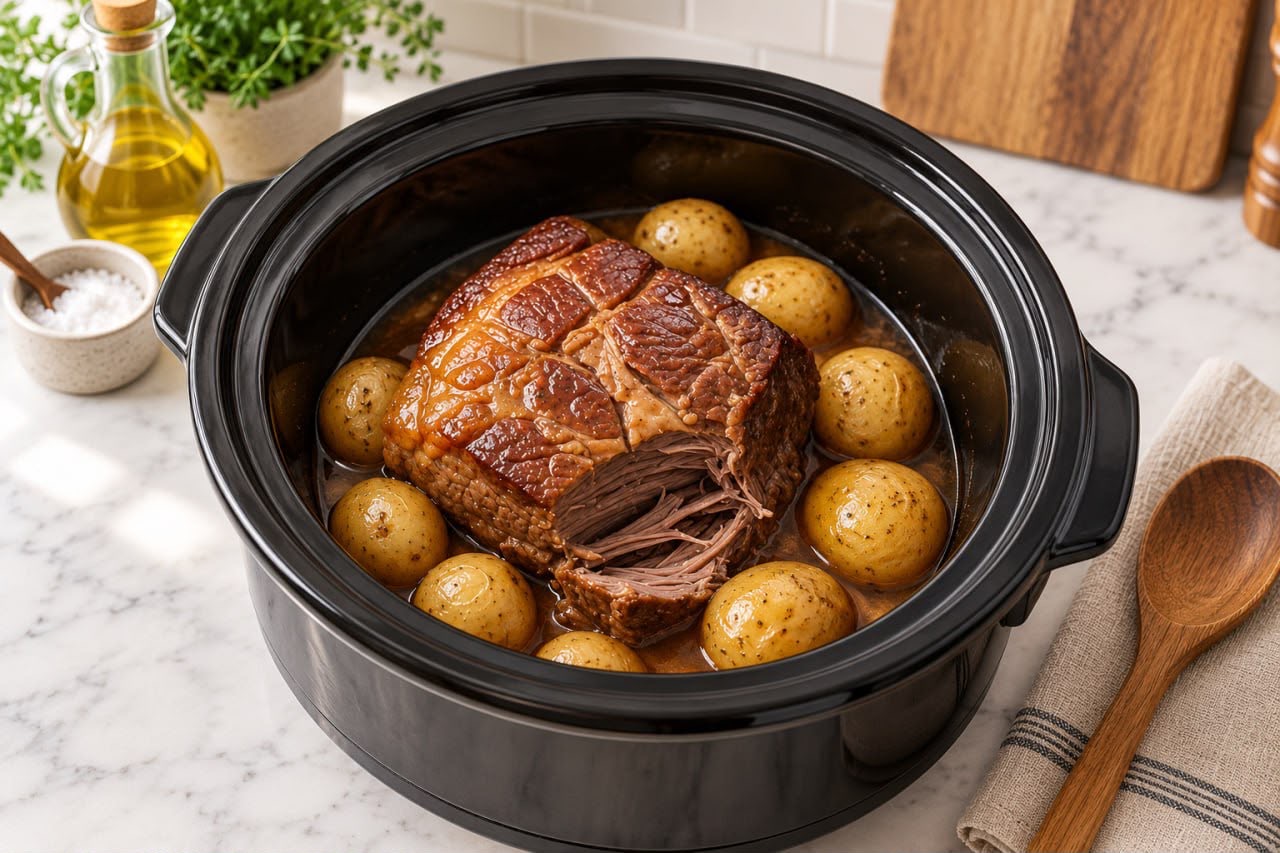
🥩🥔🤎 Slow Cooker Balsamic Brown Sugar Beef Roast & Baby Potatoes
Tender, slow-cooked beef chuck roast surrounded by buttery baby gold potatoes and coated in a rich, glossy balsamic brown sugar glaze! This easy slow cooker dinner combines the deep, savory flavor of beef with the sweet tanginess of balsamic vinegar, brown sugar, and fresh garlic. As everything cooks low and slow, the beef becomes fork-tender, the potatoes soak up the delicious cooking juices, and the sauce transforms into a beautiful finishing glaze. 🤤✨
Perfect for Sunday family dinners, cozy evenings, holiday meals, or any time you want a hearty, homemade dinner without spending hours in the kitchen. Simply add the ingredients to your slow cooker, let everything cook until tender, and finish the roast with a quick caramelized glaze for extra flavor!
⏱️ Prep Time: 15 minutes 🔥 Cook Time: Approximately 8–10 hours on LOW or 5–6 hours on HIGH 🍽️ Servings: 6 🍳 Cooking Method: Slow Cooker ⭐ Difficulty: Easy 🥩 Main Ingredient: Beef chuck roast 🥔 Side Dish: Baby gold potatoes
🛒 Ingredients
For the Beef Roast
- 1 whole boneless beef chuck roast, 3–4 lb (1.4–1.8 kg), fully thawed
- 1½ lb (680 g) small whole baby gold potatoes, washed
- 4 garlic cloves, finely minced
- Salt, to taste
- Freshly ground black pepper, to taste
For the Balsamic Brown Sugar Glaze
- ½ cup packed brown sugar
- ⅓ cup (80 ml) balsamic vinegar
- ½ cup (120 ml) low-sodium beef broth
These simple ingredients create a delicious balance of sweetness, acidity, and savory flavor. The brown sugar adds caramel-like richness, balsamic vinegar provides a tangy depth, beef broth enhances the meaty flavor, and fresh garlic brings everything together.
👩🍳 Instructions
Step 1: Prepare the Beef Roast
Remove the fully thawed beef chuck roast from its packaging and pat it dry with paper towels. Removing excess surface moisture helps the seasoning adhere to the meat.
Place the roast whole in the bottom of a slow cooker large enough to accommodate the meat and potatoes comfortably.
For additional flavor, you can sear the roast in a hot skillet with a little oil for 2–3 minutes per side before adding it to the slow cooker. This optional step develops a deeper browned flavor, although the recipe can be prepared without searing.
Keep the roast whole throughout the slow-cooking process to help it retain its shape until serving.
Step 2: Add the Baby Potatoes
Arrange the washed baby gold potatoes around the beef roast.
Keep the potatoes whole and leave their skins intact. Their small size allows them to cook alongside the beef while helping them maintain their shape.
Try to distribute them evenly around the roast rather than piling them all in one spot. This allows the cooking liquid to circulate more effectively and helps the potatoes cook evenly.
If some potatoes are considerably larger than the others, choose similarly sized potatoes when possible or cut the larger ones in half.
Step 3: Add the Brown Sugar
Sprinkle the packed brown sugar evenly over the top of the beef roast.
Allow some of the sugar to fall around the sides of the meat. As the roast cooks, the sugar will dissolve into the cooking liquid and combine with the balsamic vinegar and beef broth.
This creates the foundation of the sweet and tangy glaze that makes this dish so flavorful.
Step 4: Pour in the Balsamic Vinegar
Slowly pour the balsamic vinegar over and around the beef roast.
Allow it to run down the sides of the meat and into the bottom of the slow cooker. The vinegar adds acidity that balances the sweetness of the brown sugar while developing a rich, slightly tangy flavor.
Avoid pouring all the liquid into one small spot. Distributing it around the roast helps the flavors combine throughout the cooking process.
Step 5: Add the Beef Broth
Pour the low-sodium beef broth around the roast and potatoes.
The broth provides moisture for slow cooking and helps create a flavorful sauce. Using low-sodium broth also allows you to control the final salt level more easily.
The liquid does not need to completely cover the roast. The beef will release additional juices as it cooks, creating more flavorful cooking liquid.
Step 6: Add the Garlic and Seasonings
Sprinkle the finely minced garlic over the beef and around the potatoes.
Season everything with salt and freshly ground black pepper to taste.
For the most balanced flavor, distribute the garlic and seasonings as evenly as possible. The garlic will soften during cooking and blend with the balsamic brown sugar mixture, giving the sauce a deep, savory aroma.
If desired, you can also add a small pinch of dried thyme or rosemary for an earthy flavor that complements the beef.
Step 7: Slow Cook Until Tender
Place the lid securely on the slow cooker.
Cook using one of the following settings:
- LOW: Approximately 8–10 hours.
- HIGH: Approximately 5–6 hours.
Cooking times vary depending on the thickness of the roast, the slow cooker model, and the temperature of the ingredients when cooking begins.
Avoid lifting the lid frequently because this releases heat and can extend the cooking time.
The roast is ready when a fork slides into the meat easily and the beef pulls apart with little resistance. Chuck roast contains connective tissue that becomes tender with prolonged cooking, so it may need additional time even if it has reached a safe internal temperature.
The baby potatoes should also be fork-tender but not falling apart.
Keep the roast whole in the slow cooker until it is ready to be finished and served.
Step 8: Prepare the Balsamic Glaze
When the beef is tender, carefully transfer the whole roast to a broiler-safe metal tray. Use two wide spatulas to support the meat from underneath, as slow-cooked chuck roast can become fragile.
Leave the baby potatoes in the slow cooker and keep them warm.
Carefully pour the cooking liquid into a saucepan. If the liquid contains excess fat, skim some from the surface.
Bring the liquid to a gentle simmer over medium heat, stirring frequently. Allow it to reduce until it becomes glossy and slightly thickened.
The brown sugar will help the sauce develop a rich, smooth consistency, while the balsamic vinegar will become more concentrated as the liquid reduces.
Avoid reducing the glaze too aggressively. It should remain pourable so that it can coat the roast and potatoes easily.
Important: Taste the glaze before adding extra salt or sugar. The reduction concentrates the existing flavors, so additional seasoning may not be necessary.
Step 9: Brush and Caramelize the Roast
Brush the surface of the beef generously with some of the prepared balsamic brown sugar glaze.
Preheat the oven broiler and position the metal tray at a suitable distance from the heating element.
Broil the roast briefly, watching it constantly, until the glaze becomes shiny and lightly caramelized.
The exact time depends on the broiler and the size of the roast. Start checking after a minute or two, as the brown sugar can burn quickly.
Do not use the ceramic slow cooker insert under the broiler. Always transfer the beef to a broiler-safe metal tray.
This finishing step adds a beautiful glossy exterior while preserving the tender texture of the slow-cooked meat.
Step 10: Return the Roast to the Slow Cooker
Once the glaze has caramelized, carefully transfer the whole roast back to the slow cooker, placing it beside the baby potatoes.
Use wide spatulas to support the beef and prevent it from breaking apart.
Spoon a little of the remaining warm balsamic glaze over the top of the roast and around the potatoes.
Keep the slow cooker on its warm setting if you are serving immediately, following the appliance manufacturer’s instructions. Avoid leaving the beef at room temperature for extended periods.
Step 11: Serve and Enjoy
Transfer the beef roast to a large serving platter or bring the slow cooker directly to the table for a rustic family-style presentation.
Use tongs and a serving fork to gently pull off a portion of the tender beef. Although the roast remains whole until serving, the meat should separate easily when pulled.
Arrange several baby potatoes beside the beef and spoon the remaining balsamic brown sugar glaze over the meat and potatoes.
Finish with a little freshly ground black pepper and chopped fresh parsley if desired.
Serve immediately while everything is warm and the glaze is glossy.
🤎 What Makes This Recipe So Delicious?
Sweet and Tangy Flavor
The combination of brown sugar and balsamic vinegar creates a balanced glaze that is sweet without losing its savory character. As the sauce reduces, the flavors become more concentrated and cling beautifully to the beef.
Fork-Tender Beef
Beef chuck roast is well suited to slow cooking because its connective tissue gradually softens over time. The result is rich, tender meat that can be pulled apart easily when fully cooked.
Flavorful Baby Potatoes
The baby gold potatoes cook in the same environment as the beef, absorbing some of the savory broth, garlic, and balsamic cooking juices. Their naturally creamy texture pairs wonderfully with the glossy sauce.
Minimal Preparation
The ingredients are simple, and most of the cooking happens without constant attention. The only extra work at the end is reducing the glaze and briefly caramelizing the roast.
💡 Expert Tips for the Best Results
- Choose the right cut: Beef chuck roast is ideal because its marbling and connective tissue help produce tender, flavorful meat during long cooking.
- Keep the roast whole: Avoid cutting it into cubes before cooking if you want a traditional roast-style presentation.
- Use similarly sized potatoes: Uniform potatoes cook more evenly and are less likely to become overdone while larger potatoes remain firm.
- Do not add too much liquid: The beef releases its own juices during cooking, so the recipe does not require enough broth to submerge the meat.
- Consider searing first: Browning the beef in a hot skillet before slow cooking adds another layer of savory flavor.
- Adjust the glaze carefully: If it tastes too sharp, simmer it a little longer or add a small amount of brown sugar. If it is too sweet, a small splash of balsamic vinegar can help balance it.
- Keep the glaze pourable: The sauce will thicken further as it cools. Remove it from the heat while it can still be easily spooned over the meat.
- Watch the broiler: Sugar caramelizes quickly and can burn in seconds. Stay nearby and check the roast frequently.
- Let the beef rest briefly: Allowing the roast to rest for around 10 minutes after broiling can make it easier to handle and serve.
🥗 Best Side Dishes to Serve With Beef Roast
This hearty slow cooker dinner is delicious on its own, but it also pairs beautifully with classic American comfort-food sides.
- Roasted green beans: Their fresh flavor balances the rich beef and sweet glaze.
- Buttered corn: Adds a touch of natural sweetness to the plate.
- Creamy coleslaw: Provides a cool, crunchy contrast to the tender roast.
- Dinner rolls: Perfect for soaking up the extra balsamic sauce.
- Steamed broccoli: A simple vegetable side that complements the potatoes.
- Roasted carrots: Their natural sweetness pairs nicely with the brown sugar glaze.
- Garden salad: Adds freshness and balances the richness of the meal.
Since the slow cooker already contains beef and potatoes, a simple green vegetable or fresh salad is an easy way to complete the dinner.
🔄 Easy Recipe Variations
Garlic Herb Balsamic Beef Roast
Add dried thyme, rosemary, and a little extra minced garlic to the cooking liquid for a more traditional herb-forward roast.
Balsamic Onion Beef Roast
Add one sliced yellow onion around the beef. The onion will soften during cooking and add savory sweetness to the glaze.
Honey Balsamic Beef Roast
Replace part of the brown sugar with honey for a slightly different sweetness and a smooth, rich finish.
Balsamic Beef With Carrots
Add peeled carrot chunks alongside the baby potatoes for extra color and a naturally sweet vegetable side.
Richer Gravy-Style Sauce
For a thicker, more savory sauce, whisk a small amount of cornstarch with cold water, then gradually stir it into the simmering cooking liquid. Cook until the sauce thickens, keeping in mind that this produces a gravy-like consistency rather than a traditional thin glaze.
🧊 Storage and Reheating
Refrigeration: Store leftover beef, potatoes, and sauce in airtight containers within two hours of cooking. Refrigerate for 3–4 days.
Freezing: Freeze the cooked beef and sauce in freezer-safe containers for approximately 2–3 months for best quality. Potatoes may become softer after freezing and thawing.
Reheating: Place the beef and potatoes in a covered oven-safe dish with a little reserved sauce or broth. Heat at 325°F (163°C) until the leftovers reach 165°F (74°C). You can also reheat individual portions in the microwave, stirring or turning them as needed for even heating.
Meal prep: Divide leftover beef, potatoes, and glaze into individual portions for easy lunches or dinners during the week.
❓ Frequently Asked Questions
Can I cook this recipe entirely on LOW?
Yes. Cooking on LOW for approximately 8–10 hours is a good option for developing tender beef. Check for tenderness toward the end of the cooking period and allow more time if necessary.
Can I use a different cut of beef?
Yes, although the texture may differ. Beef shoulder or another suitable slow-cooking roast may work, but leaner cuts can become drier or less succulent.
Do I need to brown the beef first?
No. Searing is optional. It adds flavor and color, but the slow cooker can still produce tender beef without this step.
Will the baby potatoes become mushy?
They should hold their shape when small, firm potatoes are used and the cooking time is appropriate. Check them toward the end and remove them if they become tender before the beef is finished.
Can I make the glaze ahead of time?
Yes. You can prepare the balsamic brown sugar mixture ahead and refrigerate it in a covered container. Stir it before using. For the best flavor and texture, reduce the cooking liquid after the beef has finished cooking.
Why is my glaze too thin?
Slow cookers retain moisture, so the cooking liquid may be thinner than expected. Simmering it in a saucepan allows excess water to evaporate and concentrates the flavor. If necessary, continue reducing it gradually.
Can I skip the broiling step?
Absolutely. The roast will still taste delicious without broiling. Simply spoon the reduced glaze over the tender beef and potatoes before serving. Broiling is an optional finishing step that adds caramelization.
Is this recipe suitable for a family dinner?
Yes. It serves approximately six people and combines the main dish and potatoes in one slow cooker, making it convenient for a family meal.
❤️ Final Thoughts
This Slow Cooker Balsamic Brown Sugar Beef Roast and Baby Potatoes recipe is the perfect combination of convenience and comforting homemade flavor. The beef becomes wonderfully tender, the potatoes soak up the savory cooking juices, and the balsamic brown sugar glaze adds a rich, sweet-and-tangy finish.
With just a handful of everyday ingredients and a little preparation, you can create a satisfying dinner that looks beautiful on the table and tastes like it took much more effort.
Serve it warm with extra glaze, your favorite vegetables, and soft dinner rolls for a cozy meal everyone can enjoy.
Save this recipe for your next family dinner, and share it with someone who loves easy slow cooker meals! 🥩🥔🤎