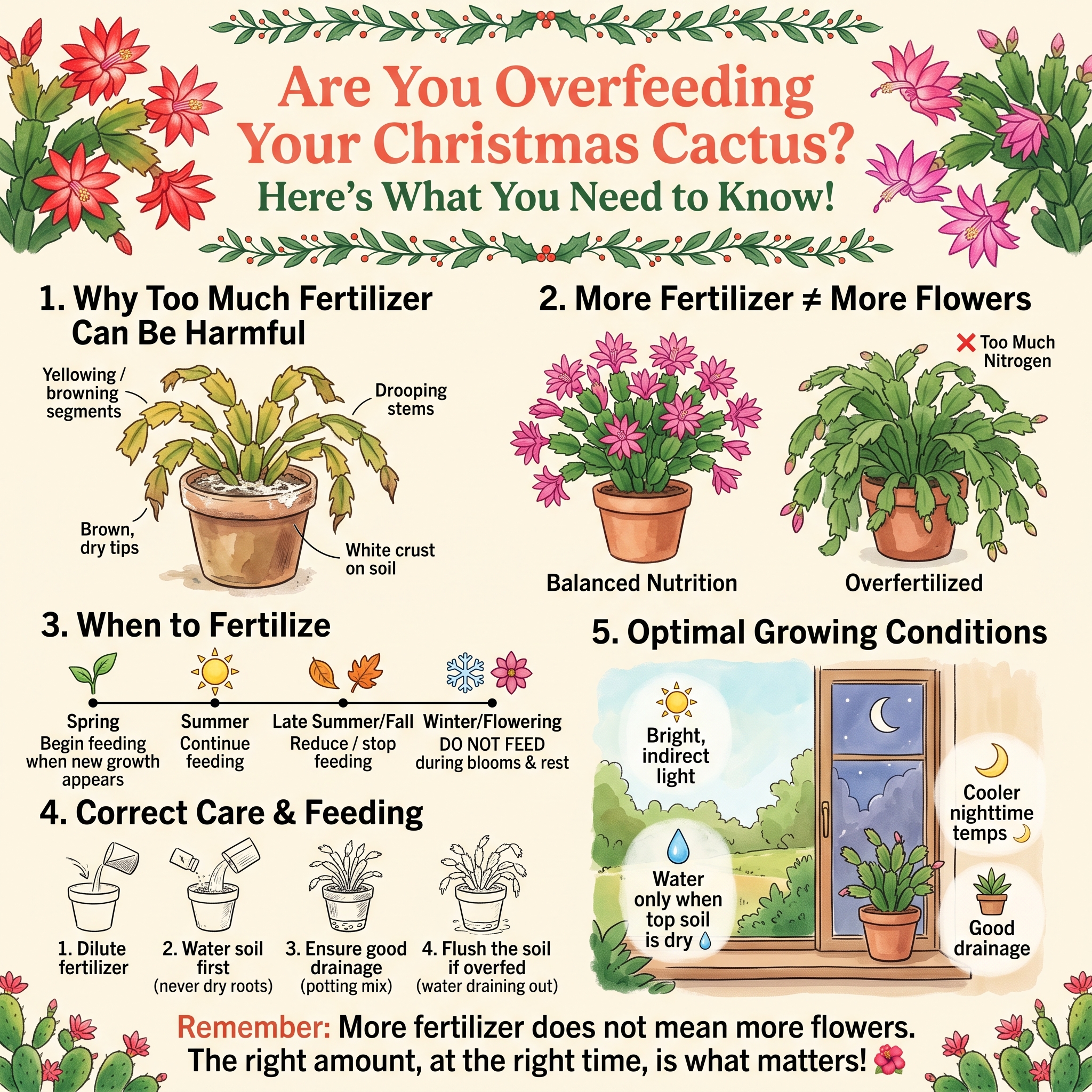
Christmas cacti are beautiful houseplants known for their colorful blooms, especially during the holiday season. But if your plant isn’t flowering as expected, or its leaves are looking weak or yellow, too much fertilizer could be part of the problem.
Many plant owners believe that adding more fertilizer will encourage more flowers. Unfortunately, that’s not how it works! Too much fertilizer can stress your Christmas cactus, damage its roots, and interfere with healthy growth.
Here’s how to avoid common feeding mistakes and help your plant thrive.
🌿 1. Why Too Much Fertilizer Can Be Harmful
Fertilizer provides nutrients that plants need to grow. However, when you apply too much, excess fertilizer salts can build up in the potting mix.
This buildup can make it harder for roots to absorb water properly and may damage delicate roots.
Signs of overfertilizing can include:
- Yellowing or browning leaf segments.
- Brown, dry tips or edges.
- Wilting even when the soil is moist.
- White crusty deposits on the soil surface.
- Weak growth or a plant that looks unhealthy.
These symptoms can also result from watering problems, poor drainage, or other issues, so check the plant’s overall care before assuming fertilizer is the cause.
🌸 2. More Fertilizer Does Not Mean More Flowers
If you want your Christmas cactus to produce plenty of beautiful blooms, adding extra fertilizer is not the answer.
Too much fertilizer, particularly when it contains excessive nitrogen, can encourage leafy growth at the expense of flowering. A plant may develop plenty of green segments but still produce fewer flowers than expected.
Flowering also depends on other important factors, including appropriate light, moderate watering, and the right temperatures and nighttime conditions.
The secret is balanced nutrition, not excessive feeding.
🪴 3. When Should You Fertilize a Christmas Cactus?
Christmas cacti generally benefit from feeding during their active growth period, usually in spring and summer.
Follow these simple guidelines:
- Spring: Begin feeding when new growth appears.
- Summer: Continue feeding according to the fertilizer label and your plant’s growth.
- Late summer and fall: Reduce or stop feeding as recommended for your fertilizer and prepare the plant for flowering.
- During flowering and rest periods: Avoid unnecessary feeding, especially if the plant is stressed or not actively growing.
The exact schedule depends on the fertilizer concentration, potting mix, and growing conditions.
💧 4. Always Use the Correct Amount
One of the most common mistakes is using fertilizer that is too concentrated.
To protect your Christmas cactus:
- Choose a balanced fertilizer suitable for houseplants.
- Read the product label carefully.
- Dilute the fertilizer as directed.
- Apply it to an appropriately moist potting mix rather than allowing concentrated fertilizer to contact dry roots.
- Never add extra powder or liquid in the hope of getting more flowers.
If you have accidentally applied too much fertilizer, stop feeding. If the pot drains freely, flush the potting mix thoroughly with clean water and allow the excess to drain away. Avoid leaving the pot sitting in water.
If the plant is severely affected or the potting mix has a heavy salt buildup, repotting into fresh, well-draining mix may be necessary.
☀️ 5. Give Your Christmas Cactus the Right Growing Conditions
Fertilizer is only one part of good plant care. Your Christmas cactus also needs the right environment.
Light: Provide bright, indirect light. Strong, direct afternoon sunlight can scorch the segments.
Water: Water when the top layer of the potting mix has begun to dry. Water thoroughly, then let excess water drain away.
Drainage: Use a pot with drainage holes and a well-draining potting mix. Constantly soggy soil can damage the roots.
Temperature: Protect the plant from sudden temperature changes and cold drafts.
Flowering conditions: Christmas cacti often need long, uninterrupted nights and suitable cool temperatures to encourage buds. Avoid repeatedly moving the plant once flower buds have formed.
These simple habits can make a significant difference in the plant’s health and flowering performance.
🌷 6. What If Your Christmas Cactus Isn’t Blooming?
If your plant looks healthy but refuses to flower, don’t immediately reach for more fertilizer.
Instead, check these common causes:
- Is it receiving enough bright, indirect light?
- Does it experience sufficiently long, uninterrupted nights?
- Are nighttime temperatures suitable for bud formation?
- Are you watering too frequently?
- Have you recently moved the plant or changed its environment?
Correcting these conditions is often more helpful than increasing the amount of fertilizer.
❤️ Final Thoughts
A healthy Christmas cactus doesn’t need excessive fertilizer to produce beautiful flowers. In fact, too much can do more harm than good.
Feed moderately during active growth, follow the fertilizer label, maintain proper drainage, and provide suitable light and flowering conditions.
With consistent care and a little patience, your Christmas cactus can reward you with gorgeous seasonal blooms year after year.
🌺 Gardening tip: Remember, more fertilizer doesn’t mean more flowers. The right amount, at the right time, is what matters!
Do you grow a Christmas cactus at home? Share your best care tip in the comments, and save this article for your next plant-care day!