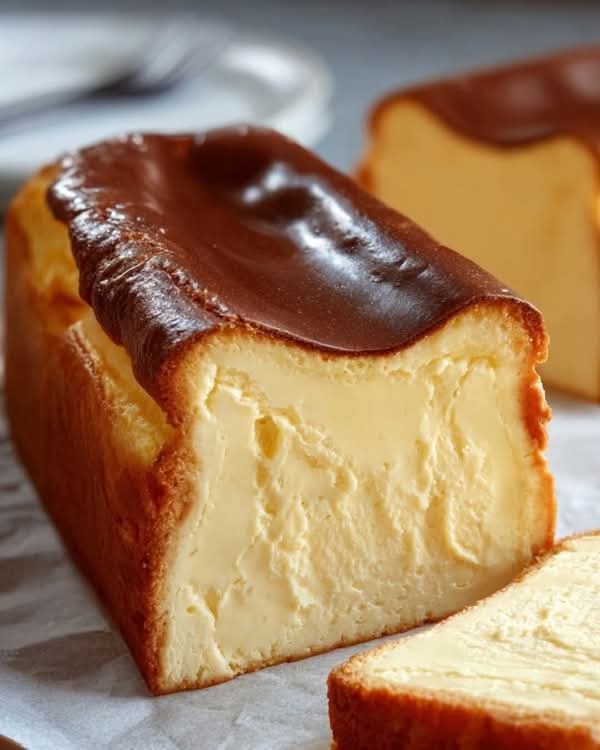
Basque Burnt Cheesecake
A rich, creamy, and effortlessly elegant cheesecake with a beautifully caramelized top.
Basque Burnt Cheesecake is famous for its rustic appearance and uniquely silky interior. Though it looks dark and deeply caramelized on the outside, the flavor is wonderfully smooth, lightly sweet, and irresistibly creamy. With its minimal ingredients and simple preparation, this cheesecake is a recipe you will return to again and again.
Unlike classic cheesecakes that require a water bath or a carefully controlled baking process, this cheesecake embraces high heat to develop its signature burnt look while keeping the center custard-like and soft. The result is a dessert that is striking to look at and extraordinary to taste.
Why This Recipe Works
Basque Burnt Cheesecake is all about balance. Cream cheese provides structure, eggs give richness and stability, and heavy cream adds the soft, melt-in-your-mouth texture. When baked at a high temperature, the surface caramelizes while the inside stays creamy. The parchment-lined pan also helps to give the cake its iconic rustic, crinkled edges.
This recipe uses a 6-inch round cake pan, ideal for a small cheesecake with generous height and impressive presentation.
Kitchen Tools You Will Need
- 6-inch round cake pan
- Parchment paper
- Mixing bowl
- Spatula or electric mixer
- Fine-mesh sieve (for sifting cornstarch or cake flour)
Ingredients
- 340 g (12 oz) cream cheese, softened
- 80 g (2.8 oz) granulated sugar
- 3 large eggs, at room temperature
- 3 ml vanilla extract
- 1 g salt
- 150 g (5.3 oz) whipping cream
- 10 g (0.4 oz) cornstarch or cake flour
Step-by-Step Instructions
- Prepare the pan:
Lightly grease a 6-inch round cake pan. Line the bottom and sides with parchment paper, allowing the paper to extend above the top edges. This will help the cheesecake rise and prevent sticking. - Soften the cream cheese:
The cream cheese must be fully softened for a smooth batter. If it is still firm, warm it slightly in the microwave until just soft, not melted. Place it in a mixing bowl and stir with a spatula or mix on low speed until smooth and creamy. - Add the sugar:
Add the granulated sugar to the cream cheese. Continue mixing until the sugar dissolves and the mixture becomes lighter and airy. - Incorporate the eggs:
Add the eggs one at a time, mixing thoroughly after each addition. Each egg should be fully blended before the next is added. At this stage, the batter should be light and silky. - Flavor and enrich:
Add the vanilla extract and salt, mixing gently. Pour in the whipping cream and whisk until smooth. - Add the thickener:
Sift in the cornstarch or cake flour and stir until the batter becomes completely smooth and free of lumps. - Fill the pan:
Pour the batter into the prepared pan. Tap the pan lightly on the counter to release any air bubbles that may have formed. - Bake:
Preheat your oven to 210°C (415°F). Bake the cheesecake in the center of the oven for 30 minutes. The top will turn deep golden brown and appear burnt, while the center will still jiggle softly. - Cool and chill:
Allow the cheesecake to cool to room temperature in the pan. Once cooled, refrigerate it for at least 4 hours before slicing. As it chills, the flavor deepens and the texture becomes even creamier. This cheesecake tastes even better the next day.
Recipe Notes
- If you prefer a stronger cream cheese flavor, increase the cream cheese slightly.
- For a softer, looser texture, increase the cream.
- Eggs must be at room temperature to prevent separation and to achieve a smooth consistency.
- The baking time should not exceed 30 minutes for the best creamy interior.
- Oven temperatures may vary; keep an eye on the top. A deep caramelized color is expected and desired.